 By Tomi Hilton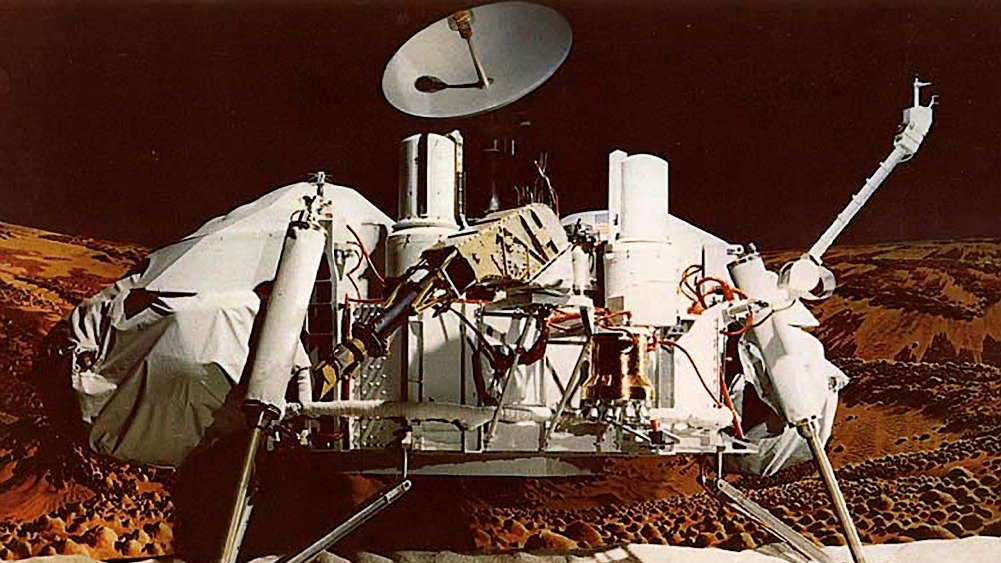
When you see a picture of the Martian surface today from a rover like Perseverance or Curiosity, you see a clear, colorful, and detailed world. But for a long time, Mars was a mystery. We had only seen blurry pictures of it from far away. The idea of landing a machine on its surface was a dream, and it was a dream that was filled with huge risks.
This dream became a reality on July 20, 1976. On that day, a machine named Viking 1 landed on Mars and sent back the very first pictures from its surface. This was a historic moment, not just for NASA but for all of humanity. It was the first time that we had ever successfully landed a spacecraft on Mars and had it work. The Viking mission was a triumph of science and engineering, and it laid the foundation for all the Mars missions that have come since. In this article, we will take a deep dive into the story of Viking 1, from its long journey to Mars to its amazing discoveries on the red, dusty plains of the planet.
In the 1970s, after the amazing success of the Apollo program, NASA had a new goal: to send a mission to Mars to search for life. It was a very ambitious goal, as no one had ever successfully landed a machine on Mars before. The Soviet Union had tried with its Mars 3 mission, but contact was lost just a few minutes after touchdown. The mission was a huge step forward for science and for our understanding of Mars.
The Viking program was a long-term plan to send two spacecraft to Mars. They were not just landers; they were a complete mission with a goal of understanding the planet from the ground and from orbit. The mission was a huge effort that took a lot of money and a lot of work from thousands of people.
The Viking program was a mission of two identical spacecraft, Viking 1 and Viking 2. Each spacecraft was made of two main parts:
- The Orbiter: This part of the spacecraft was designed to fly around Mars. Its job was to take high-resolution pictures of the entire planet, find a safe landing spot for the lander, and then act as a communication relay between the lander and Earth.
- The Lander: This part of the spacecraft was designed to land on the surface of Mars. It was a complete science lab with cameras, a robotic arm, and many different tools to study the soil and the weather. The most important goal of the lander was to perform biology experiments to search for evidence of life.
The two spacecraft were launched in 1975, and they began an 11-month journey to Mars.
The journey of Viking 1 was a long and difficult one. It was a trip of more than 440 million miles, and it took almost a year to get there. When the spacecraft arrived at Mars in June 1976, its first job was to go into orbit. From orbit, the orbiter took thousands of pictures of the Martian surface. The main goal of these pictures was to find a safe and flat place for the lander to land.
The first landing was planned for July 4, 1976, which was the 200th birthday of the United States. But when the orbiter’s pictures came back, they showed that the planned landing site was too rough and full of rocks. The landing was delayed until a safer spot could be found. This was a difficult decision, but it was a crucial one for the success of the mission. The team worked tirelessly to find a new spot.
On July 20, 1976, the lander of Viking 1 separated from the orbiter and began its descent to the surface of Mars. This was a very tense and difficult part of the mission. The Martian atmosphere is very thin, so a parachute alone would not be enough to slow the lander down.
Here is a simple look at what happened during the landing:
- Entry: The lander entered the Martian atmosphere at a very high speed, and a heat shield on its front protected it from the intense heat of the atmosphere. The heat shield also helped to slow the lander down a lot.
- Parachute: After the lander had slowed down a lot, a huge parachute opened up. The parachute was the biggest ever sent to Mars, and it slowed the lander down even more.
- Retrorockets: When the lander was about 3000 feet (1 kilometer) above the surface, the parachute detached. The lander’s retrorockets then fired to land the spacecraft gently on the surface of Mars. The engines were designed to spread the exhaust over a wide area, which was a clever way to keep the lander from cooking any potential life in the soil.
The landing was a huge success. Viking 1 touched down safely in a flat, rocky plain called Chryse Planitia, or the “Golden Plain.”
Just minutes after landing, Viking 1 sent back the very first pictures from the surface of Mars. The pictures were black and white at first, and they showed a dry, rocky, and rusty-red landscape. The images showed a footpad of the lander resting on the dusty ground, which was an important detail for scientists.
Soon after, the lander sent back the first color pictures of Mars. The images showed a beautiful landscape of red and orange rocks and a sky that was a dusty pink color. The pictures showed a world that was both like and unlike our own.
The lander’s robotic arm then began its work. It dug into the soil and collected samples for the biology experiments. The main goal of these experiments was to search for signs of life on Mars. The results of the experiments were not a clear sign of life. They showed some chemical reactions that could have been caused by life, but they could also have been caused by the unique chemistry of the Martian soil. The question of life on Mars remained a mystery, but the mission had provided us with a huge amount of new information about the planet.
The Viking missions were planned to last for only 90 days after landing. But both landers worked for much longer than that. Viking 1 worked for more than six years on the surface of Mars, and it sent back thousands of pictures and a huge amount of data about the planet’s weather, its atmosphere, and its geology. Its longevity was a testament to the hard work of the engineers who designed it and the teams on the ground who worked to keep it running. The mission finally ended in 1982 when a faulty command was sent to the lander.
The Viking program was a monumental achievement in space exploration, and its legacy is still felt today.
- It Proved the Idea: The Viking 1 mission proved that it was possible to land a spacecraft safely on Mars and have it work for a long time. It laid the foundation for all the Mars missions that have come since, including the Pathfinder, Spirit, Opportunity, Curiosity, and Perseverance rovers.
- A New View of Mars: The pictures and data that Viking sent back completely changed our view of Mars. It showed us that Mars was a cold, dry planet with a thin atmosphere, but it also showed us a world that had a history of ancient rivers and floods.
- The Search for Life: The biology experiments on Viking were the first time that we had ever searched for life on another planet. While the results were not a clear sign of life, they gave us a new understanding of the planet’s soil and its chemistry. The experiments also taught us a lot about how to search for life on other worlds.
The Viking 1 mission was a historic and courageous first step in our exploration of Mars. It was the first time that we successfully landed a machine on another planet and had it work for a long time. The mission sent back the first pictures from the Martian surface, and it gave us a new and more detailed view of the Red Planet. The legacy of Viking 1 is a reminder that even the biggest and most difficult missions can be a success with a lot of hard work and a clear vision. The work of Viking 1 laid the foundation for all of modern Mars exploration, and its success is still celebrated today as a new chapter in our journey to the stars.