 By Tomi Hilton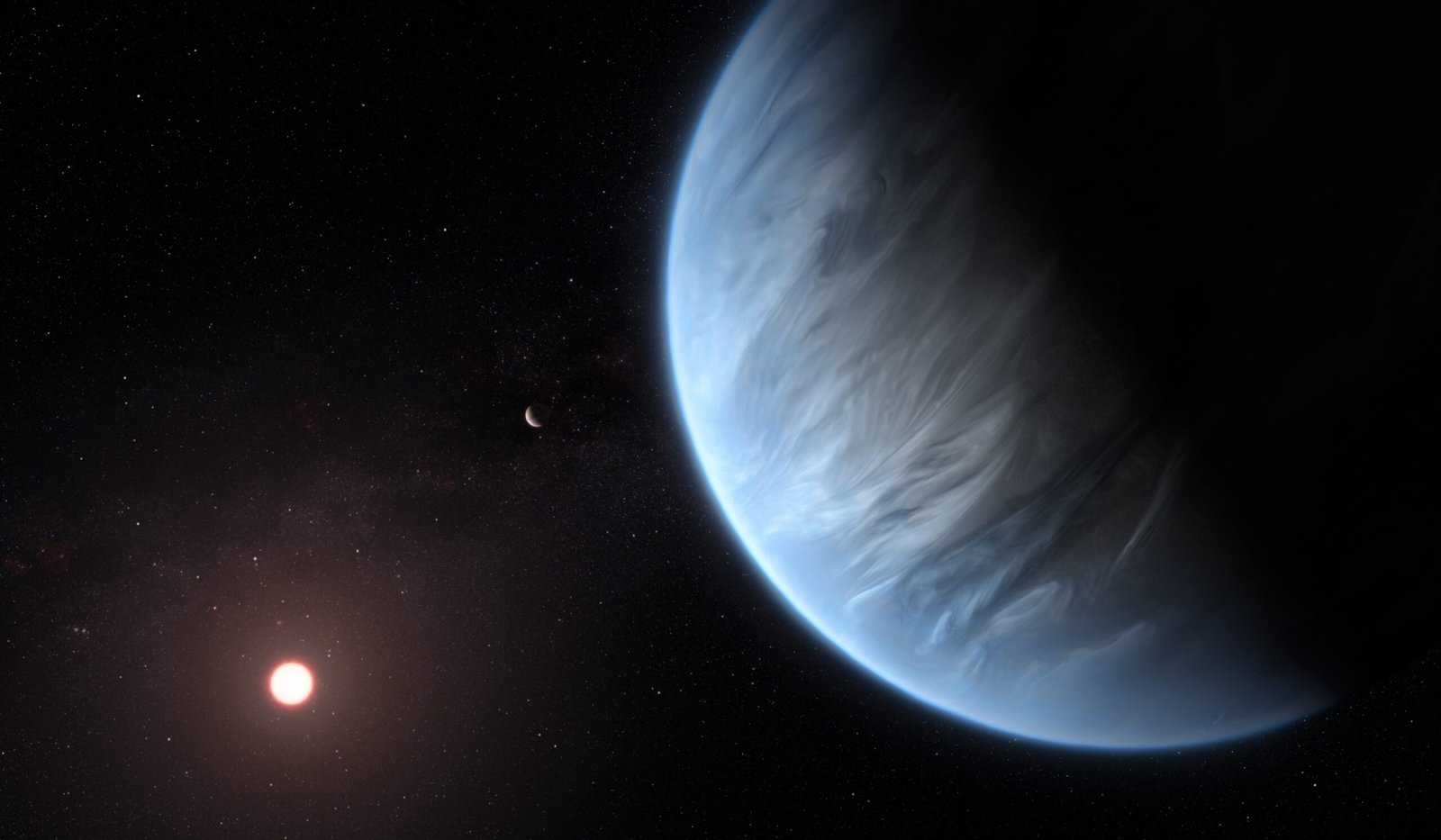
I am ready to write this article for your space website. The topic of Hycean planets is a cutting-edge and very exciting area of research, and I can explain the concepts and the debate surrounding them in a clear and compelling way.
For decades, the search for alien life has focused on finding a planet just like Earth. We call these planets “Earth twins” or “Goldilocks planets,” worlds that are rocky, the same size as our planet, and located in the perfect spot around their star to have liquid water. But what if life doesn’t need to be on a planet just like ours? What if life could be found on a world that is completely different, a world that we don’t even have in our own solar system?
This new idea is about a type of planet called a Hycean world. A Hycean world is a planet that is covered in a huge ocean and has a thick atmosphere of hydrogen. The name itself comes from a combination of “hydrogen” and “ocean.” These planets, which are a little bigger than Earth, are a new and exciting frontier in the search for alien life. Scientists believe that they could be a much more common home for life in our galaxy than Earth-like planets. This article will take a deep dive into the story of Hycean planets, exploring what they are, why they could be a good place for life, and the huge challenges we face to find out if they are truly our best hope.
A Hycean planet is a type of exoplanet that is a little bigger than Earth, but smaller than Neptune. It is a world that is covered in a huge, planet-wide ocean and is surrounded by a very thick atmosphere of hydrogen. This is a new idea that scientists have come up with, as we don’t have a planet like this in our own solar system.
The planets in our solar system are either small, rocky planets (like Earth and Mars) or giant gas planets (like Jupiter and Neptune). A Hycean world would be a planet that is in between these two extremes. It would be a world that has a solid, rocky core, a huge ocean of liquid water, and a very thick blanket of hydrogen gas. This unique combination of features is what makes them so interesting to scientists.
Scientists believe that Hycean planets could be a good home for life for a few key reasons.
- A Huge Ocean of Water: The most important reason is the presence of a vast amount of liquid water. Scientists believe that these planets could have an ocean that is many times deeper than the oceans on Earth. Water is a key ingredient for life, and the fact that these planets have so much of it is a huge plus. The ocean is believed to be in contact with a rocky seafloor, which could provide the chemical elements that life needs to survive.
- A Protective Atmosphere: The thick hydrogen atmosphere of a Hycean planet could act like a protective blanket. It would shield the ocean and any life in it from the harmful radiation of the planet’s star. This is a very important feature, especially for planets that orbit a small, active star that can have a lot of powerful flares. The atmosphere could also help to keep the planet’s temperature stable, which would help life to survive.
- A Wider Habitable Zone: The thick hydrogen atmosphere of a Hycean planet would act as a powerful greenhouse gas, trapping a lot of heat. This would mean that a Hycean planet could be much farther away from its star and still be warm enough for liquid water to exist on its surface. This makes the habitable zone for Hycean planets much wider than the habitable zone for Earth-like planets. This is a huge discovery, as it means that there are a lot more places in our galaxy where life could exist.
The idea of Hycean planets is very new, but we are already looking for them. Scientists have found a few planets that could be Hycean worlds. These planets are a little bigger than Earth and are located in the habitable zone of their stars.
- The James Webb Space Telescope: The James Webb Space Telescope (JWST) is a crucial tool for this research. Its ability to see in infrared light allows it to see the light that passes through a planet’s atmosphere. By looking at this light, scientists can figure out what chemicals are in the planet’s air. The thick hydrogen atmosphere of a Hycean planet is very easy for the James Webb to see, which makes these planets a good target for observation. The James Webb has already found a lot of methane and carbon dioxide in the atmosphere of a planet called K2-18 b, which is a top candidate for being a Hycean world.
- Searching for Biosignatures: The ultimate goal of this research is to find biosignatures, which are chemicals that can be a sign of life. On Earth, our atmosphere has a lot of oxygen and methane, which are produced by life. But on a Hycean world, the signs of life might be very different. Scientists are looking for other kinds of chemicals, like dimethyl sulfide, which on Earth is produced by marine life. The James Webb is now being used to search for these biosignatures in the atmospheres of Hycean planet candidates.
While the idea of Hycean planets is very exciting, there are still some big challenges that life might face on these worlds.
- The High Pressure: The thick hydrogen atmosphere of a Hycean planet would create a huge amount of pressure on the ocean below. The pressure at the bottom of the ocean would be immense, and it could be so high that it would be very difficult for life to exist. This is a major area of research, as we are trying to figure out what kind of life could survive in this kind of a place.
- The Lack of Sunlight: The thick hydrogen atmosphere would also make it very difficult for sunlight to reach the ocean. This means that any life in the deep ocean would not be able to use sunlight for energy, just like the life in the deep oceans on Earth. This means that life on a Hycean world would have to be powered by chemicals from deep-sea vents or other geological processes.
- The Risk of a Runaway Greenhouse Effect: While the thick atmosphere can help to keep a planet warm, it can also trap too much heat. Scientists believe that if a Hycean planet is too close to its star, the atmosphere could trap so much heat that it would cause a “runaway greenhouse effect.” This would make the ocean so hot that it would not be a good place for life.
The idea of Hycean planets is changing the way we search for alien life. We are now looking for planets that are a little bigger than Earth and have a thick hydrogen atmosphere, a kind of world that we did not think to look at before. The James Webb Space Telescope is now being used to study these kinds of planets in great detail, and the results of this research will help us to better understand where life can exist in the universe.
The story of Hycean planets is a reminder that the universe is a lot more diverse and a lot stranger than we ever thought. The kind of life that could exist out there might be very different from the life we know, and we have to be ready to look for it in new and unexpected places.
Hycean planets are a new and exciting frontier in the search for alien life. They are a type of water world that is covered in a huge ocean and has a thick hydrogen atmosphere. The presence of a huge amount of water, a protective atmosphere, and a wider habitable zone makes them a very good place to look for life. The James Webb Space Telescope is now being used to study the atmospheres of these planets for signs of life, and the results of this research could one day change our understanding of our place in the universe. While the challenges for life are great, the promise of finding life on a Hycean world is even greater. The search for life on these new and amazing worlds is a testament to our curiosity, and it is a journey that could one day lead us to our cosmic neighbors.