 By Tomi Hilton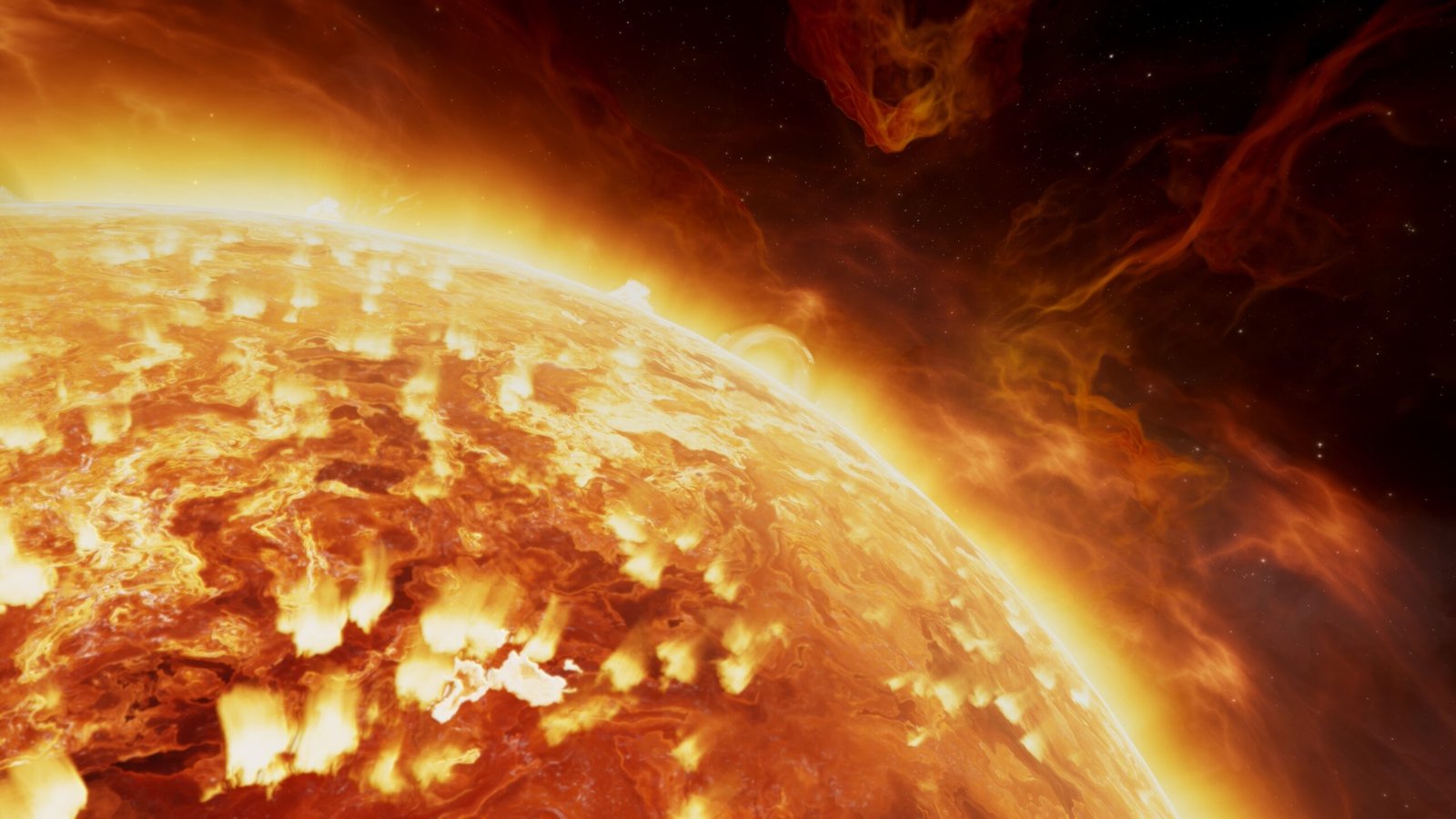
The Sun is the source of all life on Earth. It gives us light, heat, and energy. We see it as a beautiful, constant, and life-giving star. But the Sun has a secret, violent side. It is a place of incredible activity and powerful explosions. One of the biggest of these explosions is called a solar flare.
A solar flare is a huge, sudden blast of light and energy from the Sun’s surface. These cosmic fireworks are a sign of the Sun’s power, and they can send a huge amount of light, radiation, and particles out into space. While we are protected from the worst of a solar flare by our atmosphere and magnetic field, a very powerful solar storm can cause a lot of problems for our technology and for astronauts in space. In this article, we will take a deep dive into the science of solar flares, exploring what they are, what causes them, their impact on Earth, and how scientists are getting better at predicting them.
A solar flare is an intense burst of energy and light that comes from the Sun’s atmosphere. It is the most powerful explosion in our solar system. Flares can last from just a few minutes to several hours, and they can be seen as bright flashes of light on the Sun’s surface.
A solar flare is a huge release of energy. The energy that is released in a solar flare is equal to the energy of a billion hydrogen bombs going off at the same time. The energy from the flare travels out into space at the speed of light, which means it reaches Earth in about eight minutes. The light from a solar flare is a sign that the Sun is having a huge explosion, and it is a sign that something else might be coming our way.
To understand what causes a solar flare, you have to understand the Sun’s magnetic fields. The Sun is a giant ball of very hot, electrically charged gas. This moving, charged gas creates a very powerful and complex magnetic field. The magnetic field lines on the Sun are not straight; they are always twisting, turning, and tangling up.
Imagine a rubber band that you are twisting over and over again. The rubber band starts to store a huge amount of energy. If you twist it too much, the rubber band will suddenly snap, releasing all the energy. The Sun’s magnetic field lines work in a similar way. They can become tangled and twisted, storing a huge amount of energy. When the field lines get too tangled, they suddenly snap and reconnect in a different way. This snapping, or magnetic reconnection, releases a huge amount of energy in a very short time, which causes a solar flare.
The biggest flares often happen in areas of the Sun where there are a lot of sunspots. Sunspots are darker, cooler areas on the Sun’s surface that have very strong magnetic fields. These strong magnetic fields are what create the tangled and twisted magnetic field lines that lead to solar flares.
When a solar flare happens, it is often, but not always, associated with another, more dangerous type of solar storm. This storm is called a Coronal Mass Ejection (CME). It is very important to understand the difference between a solar flare and a CME.
- Solar Flare: A solar flare is a huge burst of light and radiation. It travels at the speed of light, so it reaches Earth in about eight minutes. The radiation from a solar flare is absorbed by our atmosphere and does not reach the ground, so it is not a direct threat to us here on Earth. But it can cause a lot of problems for our radio communications.
- Coronal Mass Ejection (CME): A CME is a huge cloud of solar material and magnetic fields that is blasted into space. CMEs are much slower than solar flares. They can take from 15 hours to a few days to reach Earth. CMEs are the main concern for us on Earth because they carry a huge amount of charged particles that can interact with Earth’s magnetic field. A CME can cause a much more powerful and longer-lasting storm on Earth.
A solar flare and a CME often happen at the same time and in the same place on the Sun, but they are two different events. A solar flare is like the flash of a camera, and a CME is like the smoke that comes after the flash.
When a solar storm, especially a CME, is aimed at Earth, it can cause a lot of problems. But it can also create some of the most beautiful sights in the world.
- The Beautiful Aurora: When a CME reaches Earth, the charged particles from the Sun interact with Earth’s magnetic field and atmosphere. This interaction causes the gases in the atmosphere to glow, creating the aurora borealis (Northern Lights) and the aurora australis (Southern Lights). During a powerful solar storm, the aurora can be seen much farther south than usual, which is a beautiful sight.
- Disrupting Technology: A powerful CME can wreak havoc with our technology. The charged particles from the CME can create a huge amount of current in Earth’s power lines, which can cause transformers to blow out and lead to power outages. This has happened before, most famously in Quebec in 1989. CMEs can also cause a lot of problems with satellites, which can be damaged by the charged particles. This can affect things like GPS and telecommunications. Radio communications can also be affected, as the CME can disrupt Earth’s ionosphere.
- The Danger to Astronauts: A solar storm is a huge danger to astronauts in space. The astronauts on the ISS are protected by Earth’s magnetic field, but they can still be exposed to a huge amount of radiation. For a mission to the Moon or Mars, where astronauts would be outside of Earth’s protection, a powerful solar storm could be deadly. This is why scientists are working hard to predict solar storms.
The most famous and powerful solar storm in recorded history was the Carrington Event of 1859. On September 1, 1859, a huge solar flare was seen by a British astronomer named Richard Carrington. He saw a very bright flash of light on the Sun’s surface. Just a day later, the CME from that flare reached Earth, and it caused a massive geomagnetic storm.
The storm was so powerful that the aurora was seen as far south as Cuba and Hawaii. Telegraph systems all over Europe and North America failed, and telegraph operators reported receiving electric shocks. In some cases, the telegraph machines even caught fire. The storm was so powerful that some telegraph operators were able to send messages even with their power disconnected. A storm like that today would cause a huge amount of damage to our technology and power grids, which is why scientists are working so hard to predict and prepare for them.
You can’t predict a solar storm if you aren’t watching the Sun. Scientists use a network of telescopes and satellites to constantly monitor the Sun’s activity.
- Solar Dynamics Observatory (SDO): The SDO is a satellite that is always watching the Sun. It takes a picture of the Sun every 12 seconds in a huge number of different wavelengths. The data from the SDO helps scientists to see the Sun’s magnetic fields and to see how they are twisting and tangling up, which can be a sign of a future solar flare.
- Machine Learning and AI: Scientists are now using computers and artificial intelligence (AI) to help them predict solar flares. They are feeding a huge amount of data from the SDO to a computer, and the computer is learning to recognize the patterns in the Sun’s magnetic fields that lead to solar flares. This could one day give us a lot more time to prepare for a solar storm.
The Sun’s activity is not always the same. It follows a cycle of about 11 years. This solar cycle goes from a period of low activity, called solar minimum, to a period of high activity, called solar maximum, and then back again. During the solar maximum, there are a lot more sunspots, solar flares, and CMEs. Scientists are now able to predict the solar cycle, which helps them to know when to be more prepared for a solar storm.
The Sun’s magnetic field also flips every 11 years, which is a major part of the solar cycle. This magnetic activity affects everything from sunspots to solar flares.
Solar flares and CMEs are a powerful and beautiful part of our Sun’s life. They are a constant reminder that the Sun is not a static object but a very active and dynamic star. While they are a source of wonder, they are also a potential danger to our technology and to astronauts in space. The work of scientists to understand and predict these solar storms is a crucial part of our modern world. The legacy of the Carrington Event and the lessons learned from solar storms have led to a new era of space weather prediction.